
Jack Nicklaus Golf Courses
from the Experts in Golf Holidays
⏱ 8 min read
from the Experts in Golf Holidays
⏱ 8 min read
Jack Nicklaus is one of the most prolific golf course designers that has ever lived! His golf course design company Nicklaus Design currently has over 425 courses open for play in some 45 countries worldwide, 280 of these having been designed by The Golden Bear himself.
Jack Nicklaus Facts
| Name | Jack William Nicklaus |
| Born | 21 Jan, 1940 |
| Nickname | The Golden Bear |
| Nationality | American |
| Majors | 18 |
(6 Masters, 3 Open Championships, 4 U.S. Open Championships and 5 PGA Championships)

Jack Nicklaus has left a legacy that will live beyond his exploits in winning 18 Major Championships and dominating the world of golf alongside Arnold Palmer and Gary Player. The golf courses designed by Jack Nicklaus have played host to The Ryder Cup as well as PGA Tour and European Tour events, their design features the hallmarks of Jack's game with plenty of risk and reward as well as a strong test on one's driving.
The best golf courses designed by Jack Nicklaus include Gleneagles in Scotland where The PGA Centenary Golf Course hosted Europe's famous 2014 Ryder Cup win, The Solheim Cup as well as a number of European Tour events. Measuring over 7,200 yards, The PGA Centenary provides a stern examination with views across the dramatic Perthshire countryside.
Golfers heading over to the USA will get to experience a wide variety of golf courses that were laid out by The Golden Bear. These include the championship tests at PGA National in Miami which was the host of The 1983 Ryder Cup as well as an annual host for The PGA Tour. Those heading to South Carolina will be well advised to take in a visit to Hilton Head with the famed Harbour Town also featuring within Jack Nicklaus' design catalogue. This collaboration with famed architect Pete Dye in the creation of Harbour Town Golf Links. Despite being one of Jack's first ever design projects, the course has stood the test of time and is not only a regular feature on The PGA Tour but also considered to be one of the toughest golf courses off the tee. Further well-known designs by Nicklaus include Muirfield Village in Ohio which has not only been a PGA Tour host since the 1970's but also The Ryder Cup, Solheim Cup and numerous US amateur events. Jack's design at The Bear's Club in Florida is the home course to a number of PGA Tour professionals who have flocked here since it's opening in 1999.
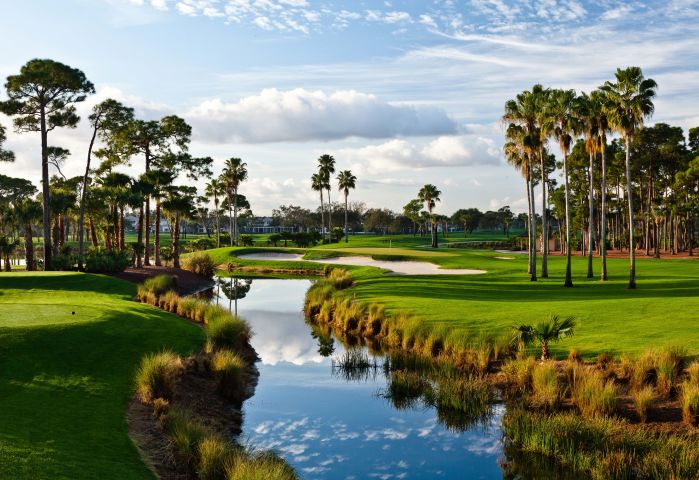
Miami - South East
Rated 9.4 by 3 golfers (Read reviews of PGA National Resort & Spa)
Flights, 5 Nights, 3 Rounds
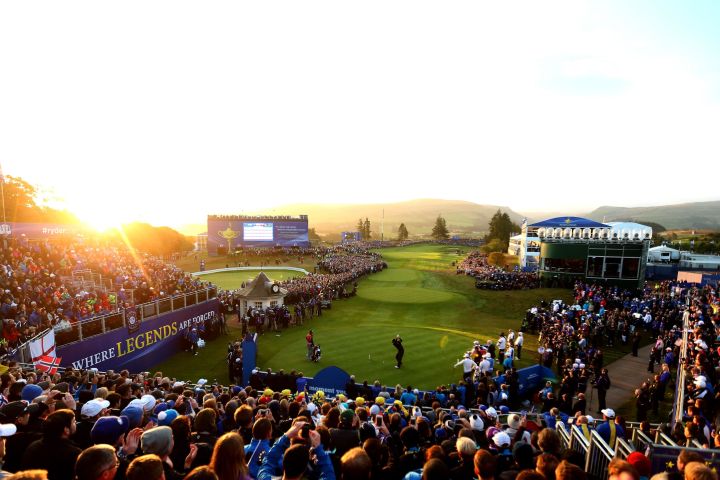
Perthshire & Heartlands
Rated 9.4 by 115 golfers (Read reviews of Gleneagles)
1 Night, 2 Rounds

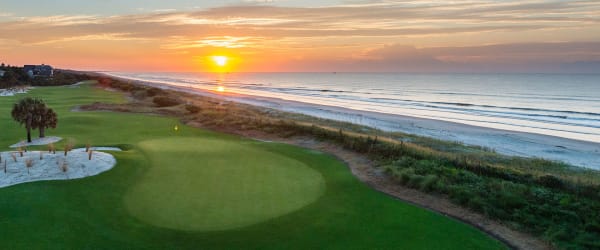
Hilton Head
Rated 10 by 14 golfers (Read reviews of Harbour Town Golf Links)
Flights, 5 Nights, 3 Rounds
Regarded by many as the greatest professional golfer of all time, the name of Jack Nicklaus is synonymous with golf. Also known as ‘The Golden Bear’, due to his natural ability for hard-hitting ball striking and nerves of steel. Nicklaus has carried the golf standard for over half a Century since he first came to prominence as an amateur.
Born on January 21st, 1940 in Columbus, Ohio he took up golf at the age of ten winning the first of five straight Ohio State Junior titles at 12 years of age and the Ohio Open at 16, where he competed against professional players. He also won the U.S Amateur title twice; while attending Ohio State University and represented the United States in the Walker Cup, in 1959 and 1961.
In 1960, Nicklaus finished second in the U.S Open, 2 shots behind Arnold Palmer. Nicklaus carded a four-round total of 282 which stands today as the lowest ever score made by an amateur in the Major causing Golf Digest to name Nicklaus as the top amateur player in the world three years running.
Nicklaus’ amateur record was impressive but it is his achievements as a professional that has really defined him as perhaps the best golfer of all time. Since turning professional in 1962, Nicklaus has chalked up a remarkable 103 professional wins, which includes 18 Majors; the first of which coming in his debut season as a professional where he beat Arnold Palmer in a play-off to win the U.S Open.
The following year, Nicklaus won two of the four Major tournaments – the U.S Masters and the USPGA – as well as a further three tournaments, including the Tournament of Champions but endured a Major-less season in 1964, although he did finish top of the tour money list that year.
Nicklaus captured the U.S Masters again in 1965 and 1966, making him the first player to win consecutive Masters titles, and set a tournament record of 271 in 1965 which was only bested in 1997 by Tiger Woods’ four-round total of 270. Nicklaus also won the 1966 Open at Muirfield to complete his first ‘Grand Slam’ – a feat he would complete three times over.
Bobby Jones’ record was surpassed in 1973 by taking the USPGA for his 12th career Major and between 1975 and 1978 he would go on to add 3 more Major titles taking his career total to 15 adding a fourth USPGA title a Masters and the 1978 Open.
In 1980 he clinched the U.S. Open and the USPGA taking his Major tally to 17 but would only win twice more on tour in the next 5 years before rolling back the years to capture the 1986 U.S Masters – his sixth in all – by posting a back nine score of 30, which featured an eagle-birdie-birdie run-in before making par at the last to become the oldest winner of a Major championship and take his Major total to 18.
Nicklaus joined the Champions Tour in 1990 when he turned 50 and won a further 19 tournaments before bowing out of competitive play on June 13th, 2005, bringing the curtain down on an illustrious career.
During his playing days, he founded Nicklaus Design, which has designed over 425 golf courses across the world. Their philosophy of ‘timeless, premium golf courses’ has been shown almost every time, with well-known examples including Gleneagles PGA Centenary course, Harbour Town Golf Links, Turtle Point at Kiawah Island, Monte Rei and Muirfield Village.
His own, bold, personal philosophies shine through at many of his courses, with Nicklaus being quoted that par-3 holes should be played with irons, rather than woods and that distance does not necessarily indicated quality. He also considered himself to be an ‘armchair architect’ from early in his career, admitting to visualising improvements whenever he played.
Today, he is still the head of Nicklaus Design and runs the Memorial Tournament on the PGA Tour.
Jack Nicklaus has created golf courses across the globe but the ones we enjoy within the UK and Ireland have been recognised as some excellent championship tests of golf.
Whether that is Cornwall's revered St Mellion International Resort which can count the likes of Seve Ballesteros, Jose Maria Olazabal and Bernhard Langer amongst it's past champions, The London Club, which is another European Tour venue, or Mount Juliet, which has welcomed the planet's best golfers with The World Golf Championship which was won by Tiger Woods, Nicklaus' designs are amongst the very best modern golf courses available to play in the UK and Ireland.
Golfers seeking a great golf resort experience can head to Carden Park in the North West of England where they can enjoy a layout crafted by the 18-time Major Champion, complete with an award-winning hotel and views across the mature Cheshire countryside.

Cornwall
Rated 8.8 by 391 golfers (Read reviews of St Mellion Estate)
1 Night, 2 Rounds
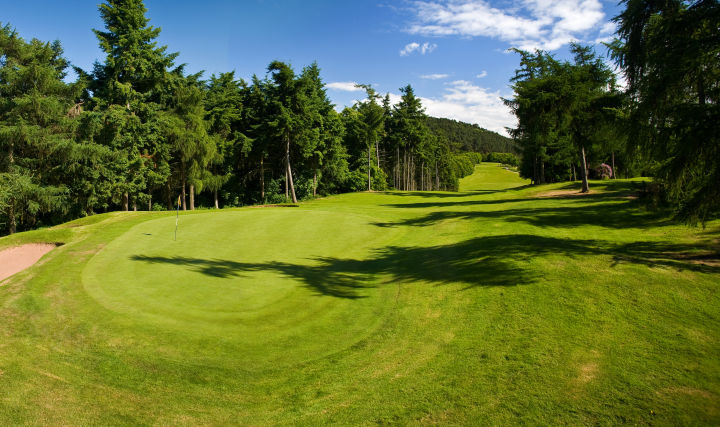
Cheshire
Rated 9 by 589 golfers (Read reviews of Carden Park Hotel, Golf Resort & Spa)
1 Night, 2 Rounds

Kent
Rated 8 by 4 golfers (Read reviews of The London Club)
1 Night, 2 Rounds

Dublin
Rated 9.2 by 37 golfers (Read reviews of Killeen Castle)
1 Night, 2 Rounds

East Ireland
Rated 9.4 by 15 golfers (Read reviews of Mount Juliet)
Our Golf Experts are available to provide full details of all deals at Mount Juliet - call now for an instant quote!

South Coast & Pembrokeshire
Rated 8.8 by 40 golfers (Read reviews of Machynys Peninsula Golf & Country Club)
1 Night, 2 Rounds
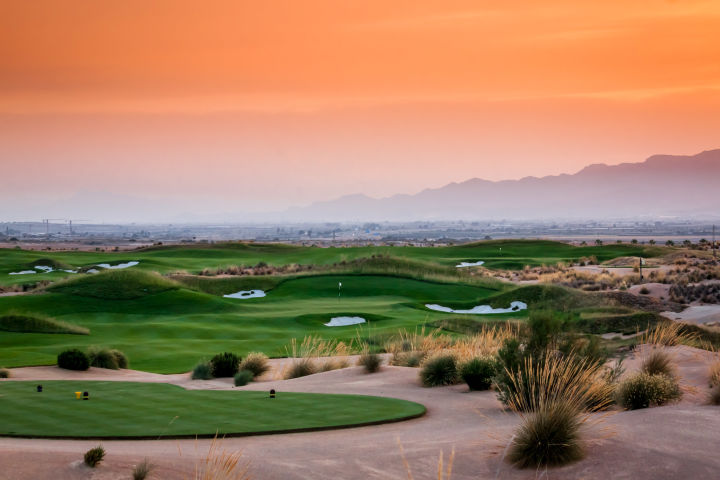
A collection of six Nicklaus designed layouts in Murcia, the Nicklaus Golf Trail is the world's most concentrated collection of golf courses designed by the Golden Bear.
Blessed with the famous sunshine that washes over Murcia and its outstanding golfing destinations, the Nicklaus Golf Trail offers fantastic courses and equally impressive value for money.
Alhama Signature Course
Par: 72 | Year Opened: 2009 | Length: 6,884 metres
Hacienda Riquelme
Par: 72 | Year Opened: 2007 | Length: 6,416 metres
La Torre
Par: 68 | Year Opened: 2004 | Length: 5,350 metres
El Valle
Par: 71 | Year Opened: 2004 | Length: 6,145 metres
Mar Menor
Par: 72 | Year Opened: 2006 | Length: 5,958 metres
Murcia
Rated 6.4 by 10 golfers (Read reviews of Alhama Signature Golf Course)
3 Nights, 2 Rounds
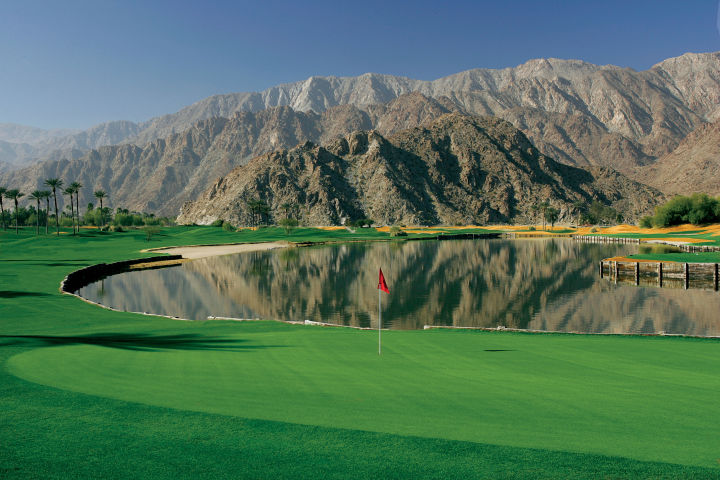
From New York to California, Jack Nicklaus has created stunning golf courses that welcome thousands of golfers every year. The views offered at La Quinta with its stunning mountain backdrops as well as Trump Golf Links at Ferry Point with the New York skyline framing the course, Nicklaus' designs have certainly claimed some rather illustrious real estate.
Golfers heading to South Carolina can enjoy the amazing golf resort offered at Kiawah Island where Jack created the revered Turtle Point Golf Course. This is one that has utilised the natural landscape perfectly to make a golf course that leaves for a particularly memorable round of golf.
The US is also home to some of Jack's most famous and top-rated golf courses. The pinnacle being Muirfield Village Golf Club in Ohio. Having hosted The PGA Tour since 1976 as well as hosting The 1987 Ryder Cup and 2013 Presidents Cup, Muirfield Village is one of the USA's highest pedigree golf courses and is a regular feature within the World's Top 100. Another note-worthy Jack Nickalus design is Valhalla Golf Club in Louisville. As a Major host with The USPGA Championship having been selected for 1996, 2000, 2014 and 2024 events as well as hosting The 2008 Ryder Cup where Paul Azinger's United States team, led by the likes of Boo Weekly and Antony Kim, claimed a memorable victory over Team Europe.

Jacksonville - North East
Rated 8 by 4 golfers (Read reviews of King & Bear Course, World Golf Village)
Our Golf Experts are available to provide full details of all deals at King & Bear Course, World Golf Village - call now for an instant quote!

Kiawah Island
Rated 9 by 2 golfers (Read reviews of Turtle Point, Kiawah Island)
Flights, 5 Nights, 3 Rounds

New York
Rated 8 by 1 golfer (Read review of Ballys Golf Links at Ferry Point)
Our Golf Experts are available to provide full details of all deals at Ballys Golf Links at Ferry Point - call now for an instant quote!

Georgia
Our Golf Experts are available to provide full details of all deals at Great Waters Course at Reynolds Lake Oconee - call now for an instant quote!
Palm Springs
Rated 9.6 by 28 golfers (Read reviews of La Quinta Resort & Club - PGA WEST)
Flights, 5 Nights, 3 Rounds
North Carolina
Rated 9.8 by 19 golfers (Read reviews of Pinehurst Resort)
Flights, 5 Nights, 3 Rounds
Jack Nicklaus has designed and created a host of superb tournament golf courses in Europe that are hugely popular for those enjoying a golf holiday to Portugal, Spain, France and Italy.
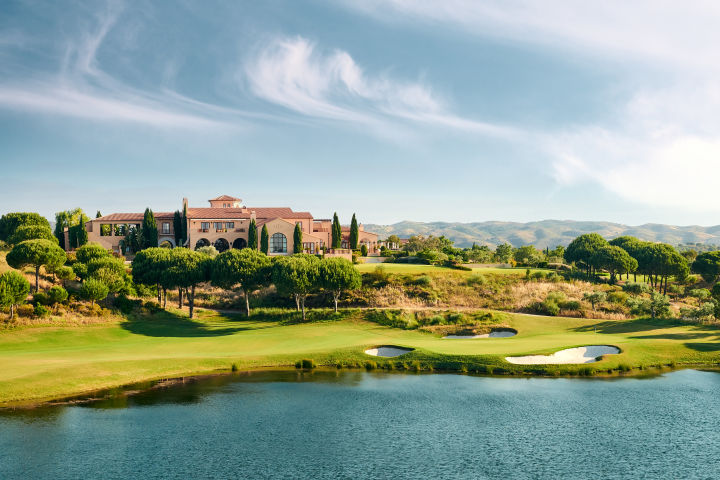
The best golf course in Europe that Jack Nicklaus has designed is found at the amazing Monte Rei Golf Resort in the Algarve. This luxury Portuguese golf destination has been ranked as one of the best golf courses in Portugal and provides a must-play layout in the East Algarve. Golfers playing here are welcomed with an 18-hole championship design that meanders through mature valleys and provides a challenge that is perfect for golfers of a range of handicaps, from tour pros to society golfers.
The European Tour has visited one of Jack's most popular golf resorts in Spain at the picturesque Montecastillo Resort just outside of Jerez. This 18-hole championship golf course is complemented perfectly with a luxury 5-star hotel and was a feature on The European Tour for many years with the likes of Darren Clarke and Lee Westwood taking the coveted title. Jack's design quality is clear throughout the course but the closing hole, an elevated tee-shot par-4 with water waiting any shot short or left of the putting surface is enough to keep you focussed until the very last shot of the round.
Another hugely popular golf holiday destination in Spain is the Jack Nicklaus designed Villaitana Resort overlooking Benidorm. This 36-hole golf resort is framed by both mountains and sea and provides an excellent championship challenge on The Levante Course as well as a trickier, albeit shorter, offering at The Poniente Course.
Golfers heading to Italy, one of Europe's most highly anticipated golf destinations, can find great golf on offer at Le Robinie near to Milan and Arzaga Golf Club with an enviable position in Lake Garda.
Tavira
Rated 8.8 by 131 golfers (Read reviews of Monte Rei Golf Resort)
Flights, 3 Nights, 2 Rounds
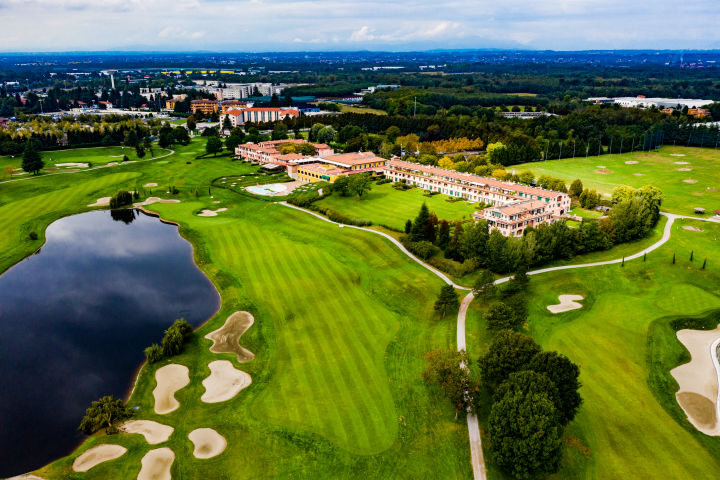
Northern Italy & Lakes
Rated 9 by 2 golfers (Read reviews of Le Robinie Golf Resort)
Our Golf Experts are available to provide full details of all deals at Le Robinie Golf Resort - call now for an instant quote!
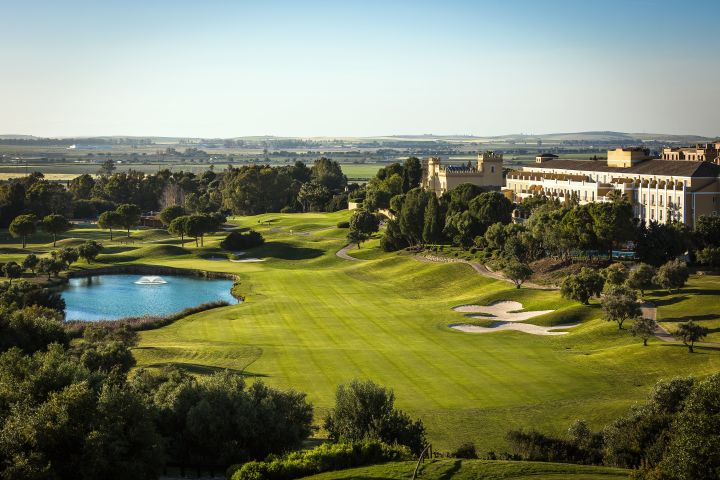
Cadiz
Rated 8.8 by 220 golfers (Read reviews of Barcelo Montecastillo Golf 5*)
3 Nights, 2 Rounds

Benidorm
Rated 8.8 by 709 golfers (Read reviews of Melia Villaitana Golf Resort)
Flights, 3 Nights, 2 Rounds
Austria Golf Courses
Gut Altentann Golf Club
Canada Golf Courses
Nicklaus North, Whistler
China Golf Courses
Mission Hills Golf Resort
Dominican Republic Golf Courses
Punta Espada Golf Club
Dubai Golf Courses
Al Zorah Golf Club
Arabian Ranches Golf Club
Germany Golf Courses
Gut Larchenhof Golf Club
India Golf Courses
Classic Golf and Country Club
Latvia Golf Courses
Jurmala Golf Club
Mexico Golf Courses
Moon Spa Golf Club
Riviera Cancun Golf Club
Palmilla Golf Club
Morocco Golf Courses
Samanah Country Club
Michlifen Golf and Country Club
New Zealand Golf Courses
The Kinloch Golf Club
South Africa Golf Courses
Peral Valley Golf Club
Simola Golf Club
Switzerland Golf Courses
Crans-sur-Sierre Golf Club
Thailand Golf Courses
Laem Chabang International
Mission Hills Phuket
Springfield Village
USA Golf Courses
The Ocean Course at Hammock Beach
Summit Rock at Horseshoe Bay
Old Corkscrew Golf Club
Pronghorn Golf Club
Ritz-Carlton Golf Club at Dove Mountain
The Greenbrier
Evermore Golf Resort