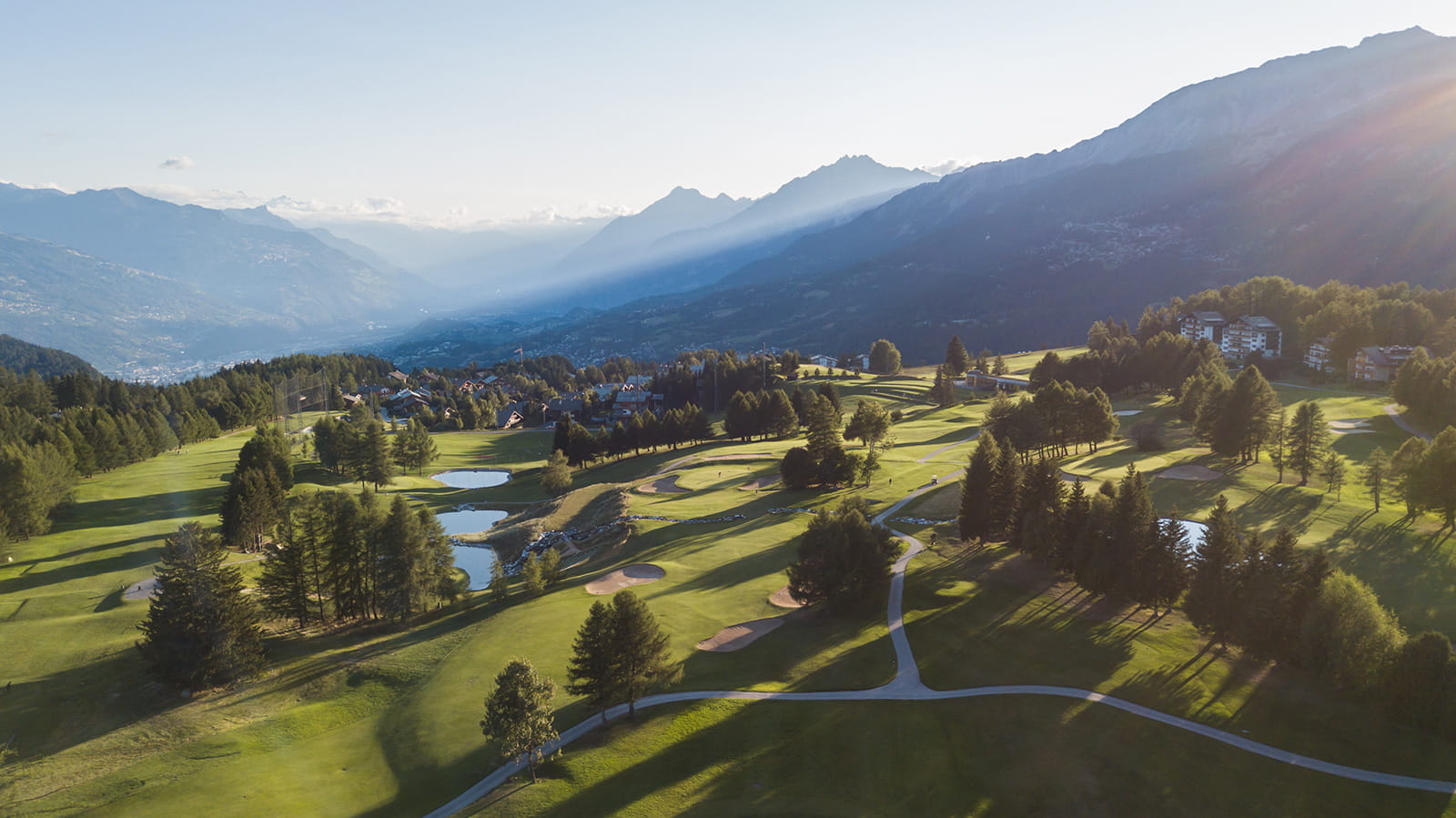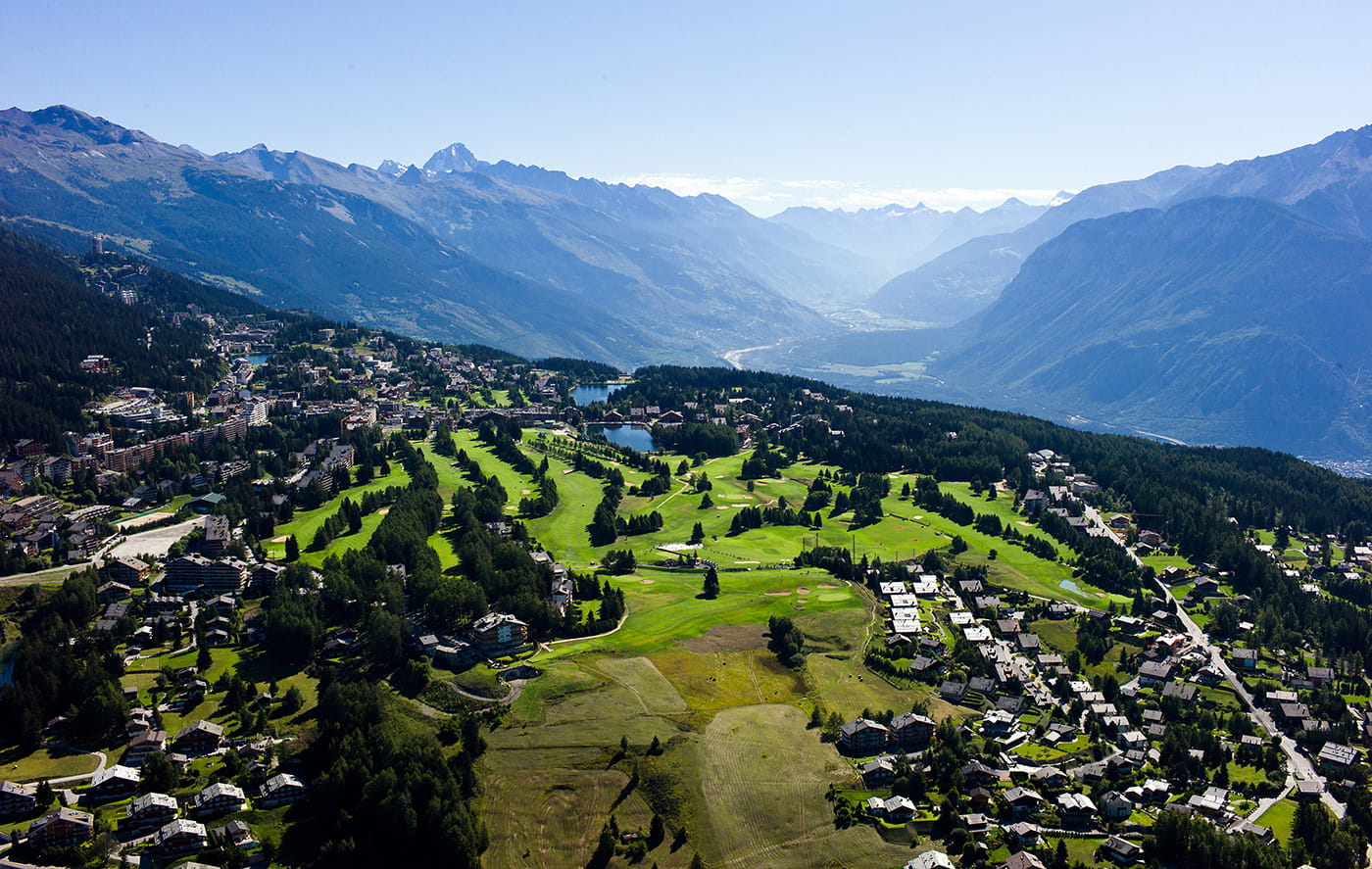

Some of my earliest memories of golf trace back to watching The Masters on the BBC, followed by tuning into Screensport and Eurosport. Among all the courses beamed into my living room over the years, one course stood out above the rest: Crans-sur-Sierre in Switzerland.
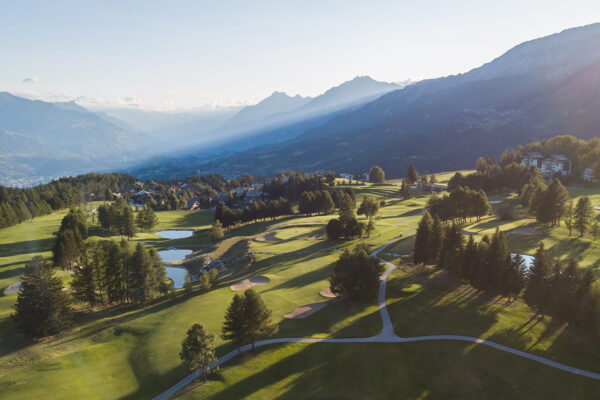
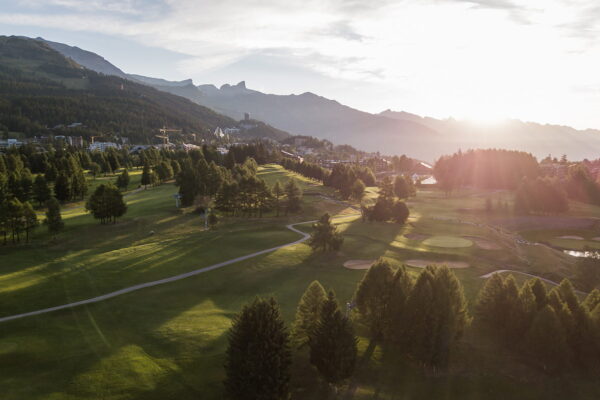
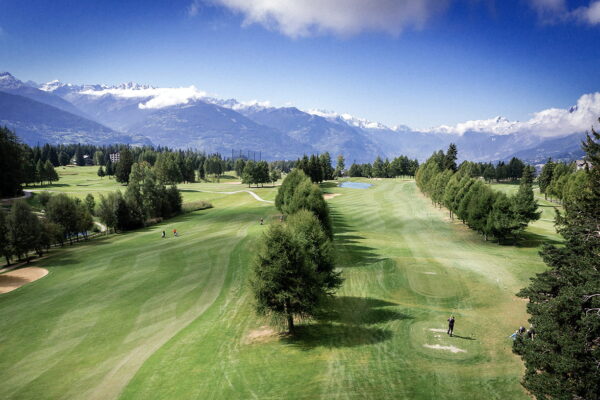
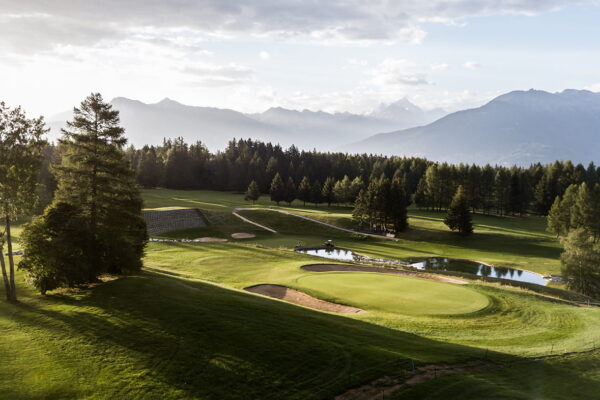
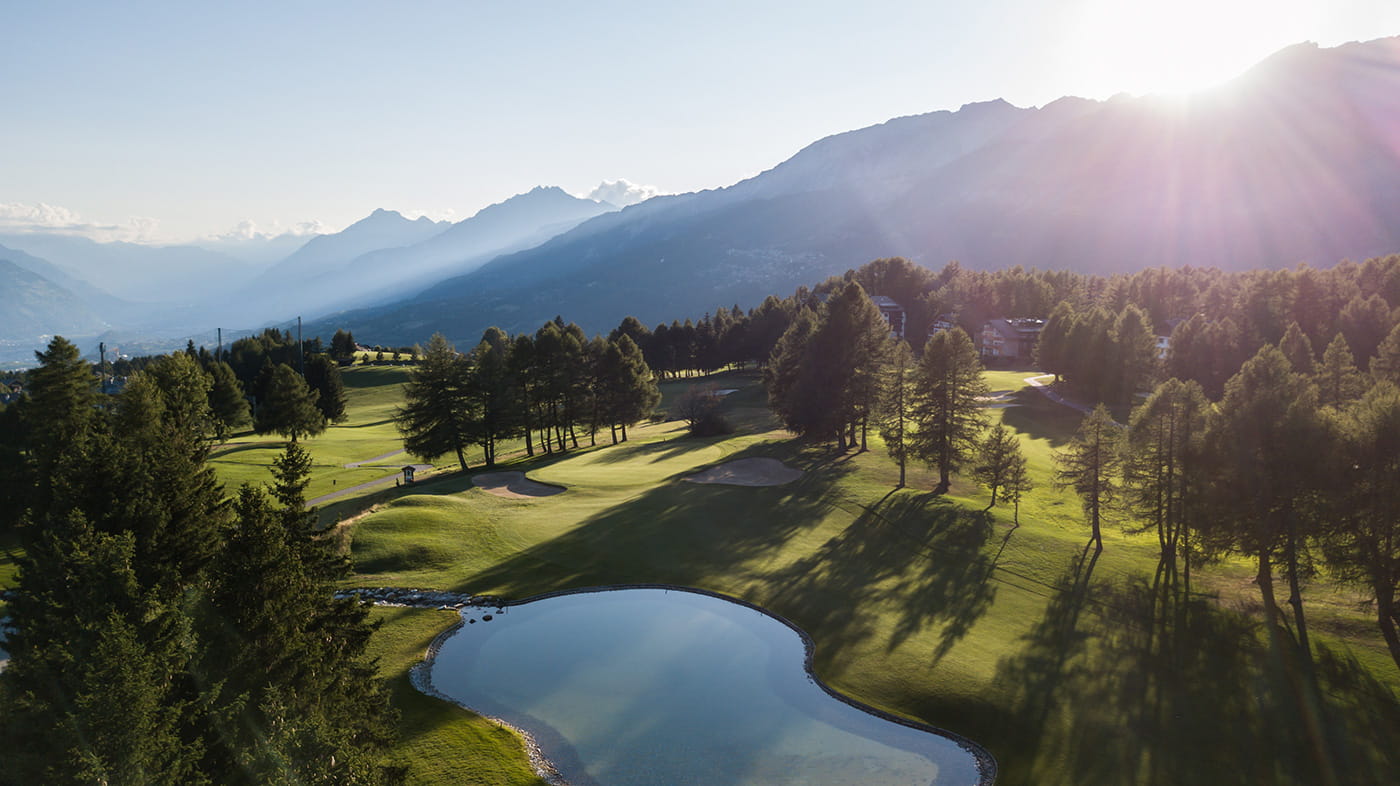
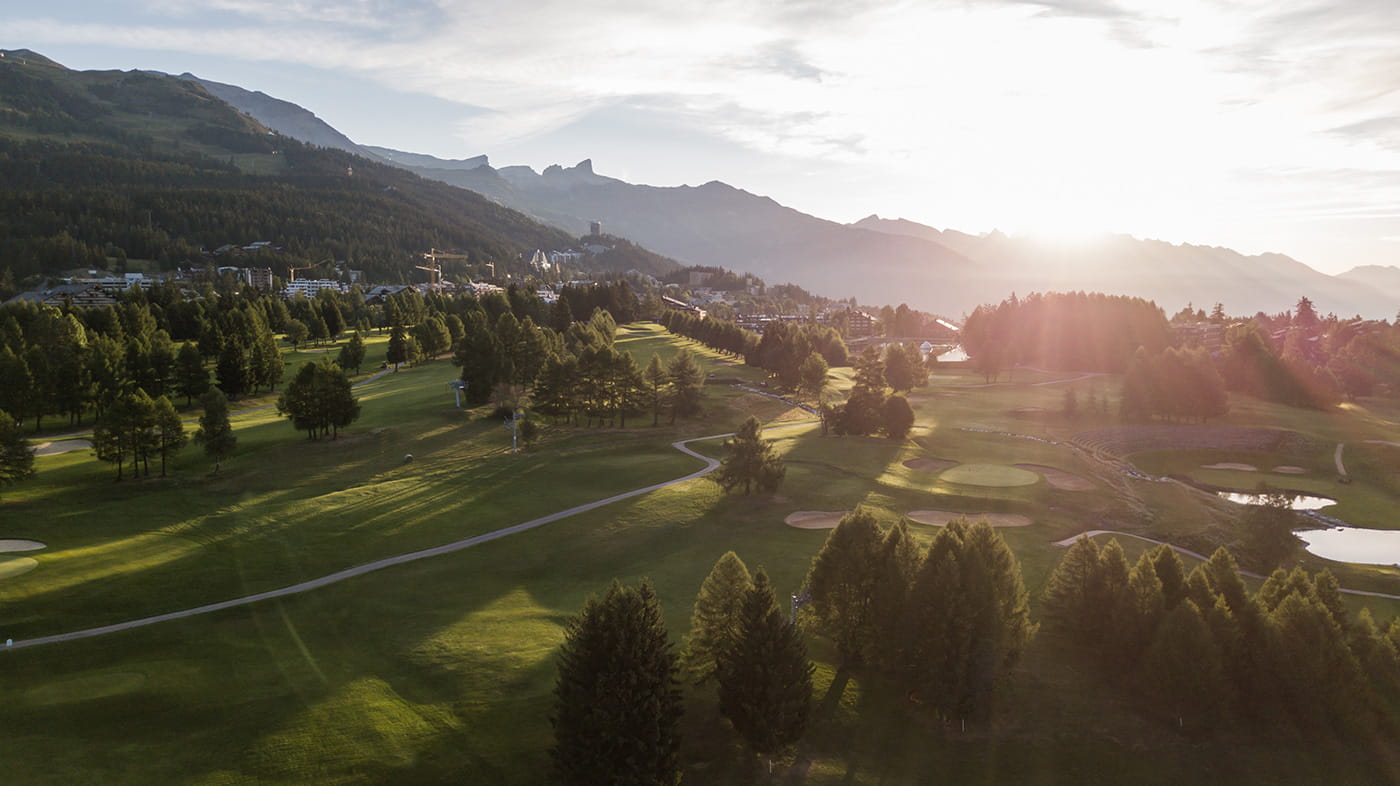
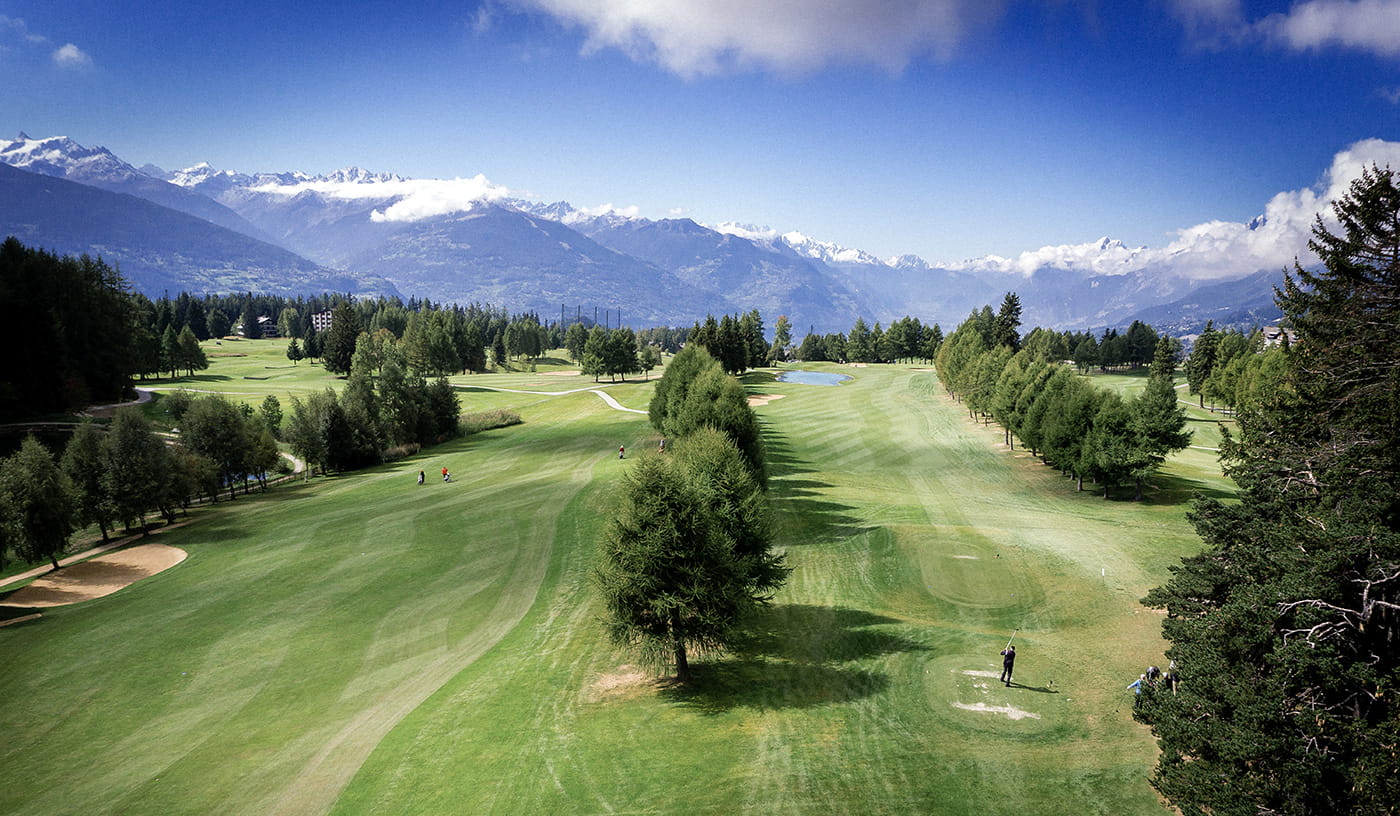
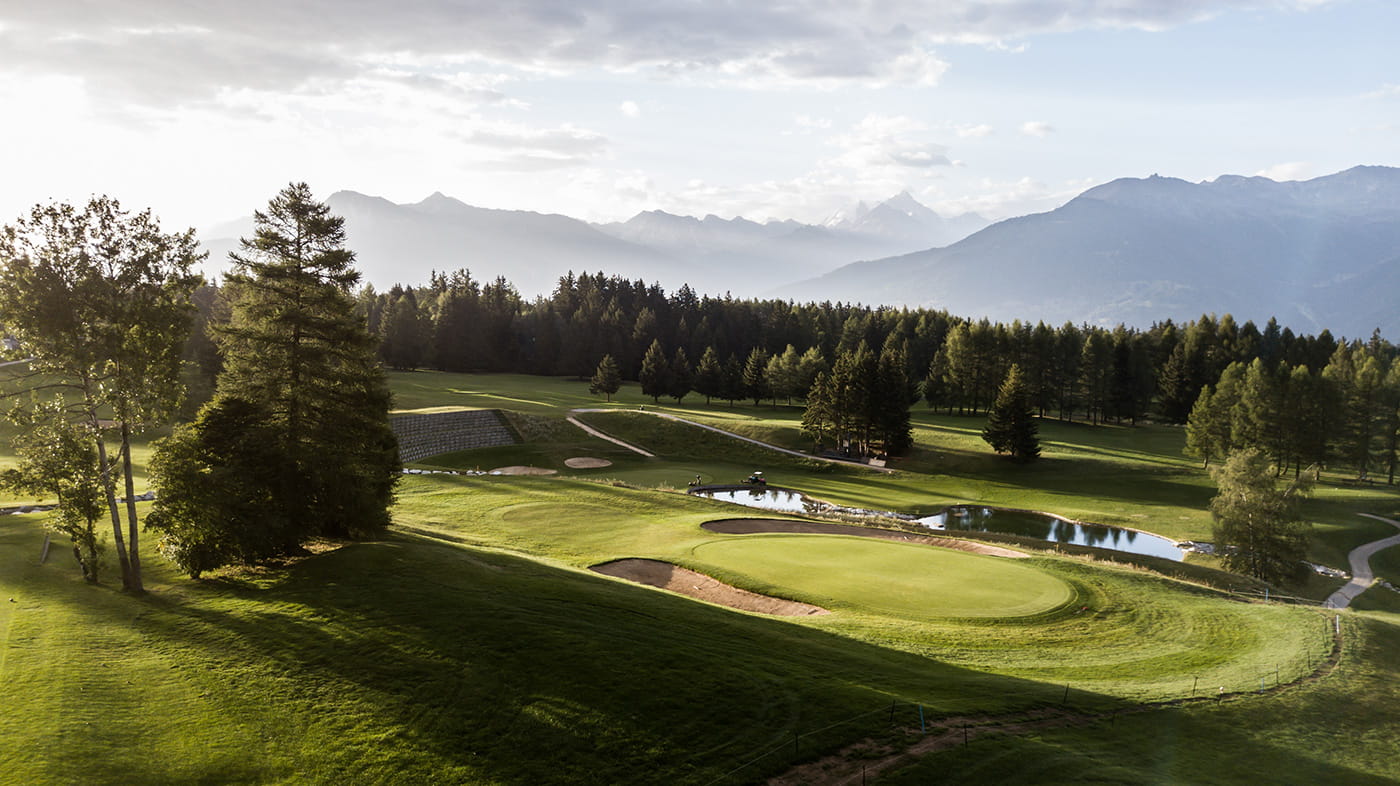
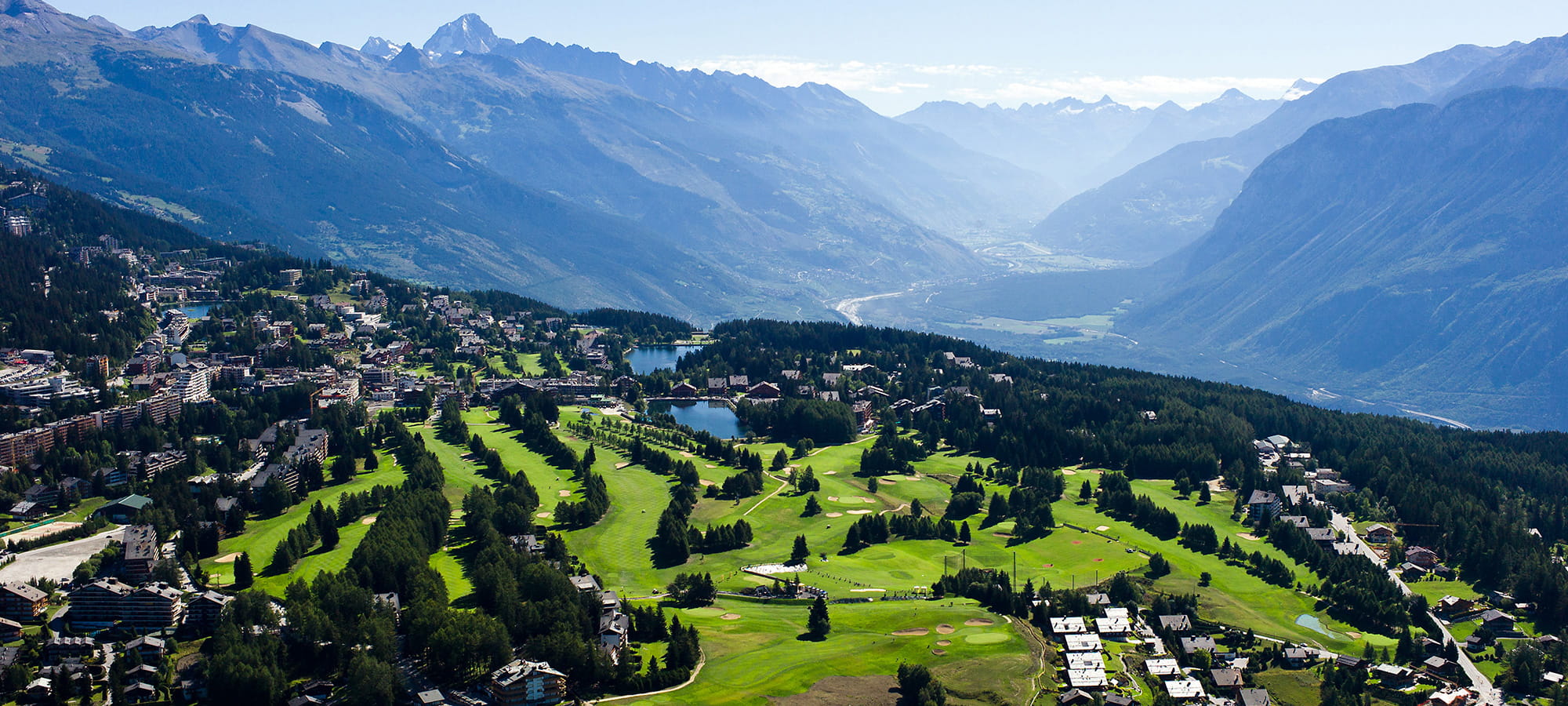
There was something different about it. Plenty of tournament venues look good on television, but Crans-sur-Sierre looked improbable. Fairways cut into the mountainside, chalet roofs close enough to feel part of the course and those huge Alpine peaks sitting behind the action like a painted backdrop that someone had overdone. Watching Seve Ballesteros and José María Olazábal shape shots in that setting left a proper mark. The idea of playing golf at roughly 1,500 metres above sea level, where the ball flies that little bit farther and every strike seems to hang in the air a fraction longer, lodged itself firmly on the bucket list.
So when my son and I started piecing together a road trip across Europe, I only had one non-negotiable. However the route changed, however the hotels moved around, we had to play Crans-sur-Sierre.
Arriving in the Swiss Alps
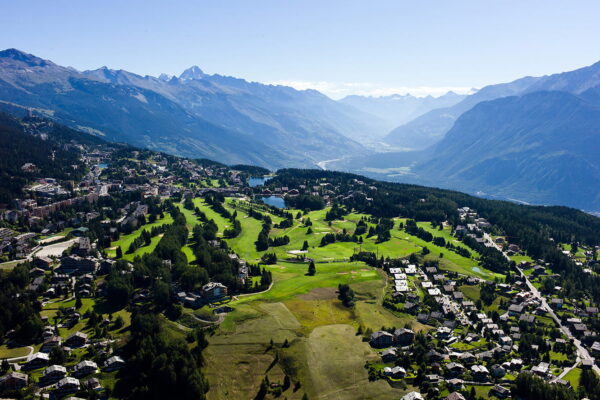
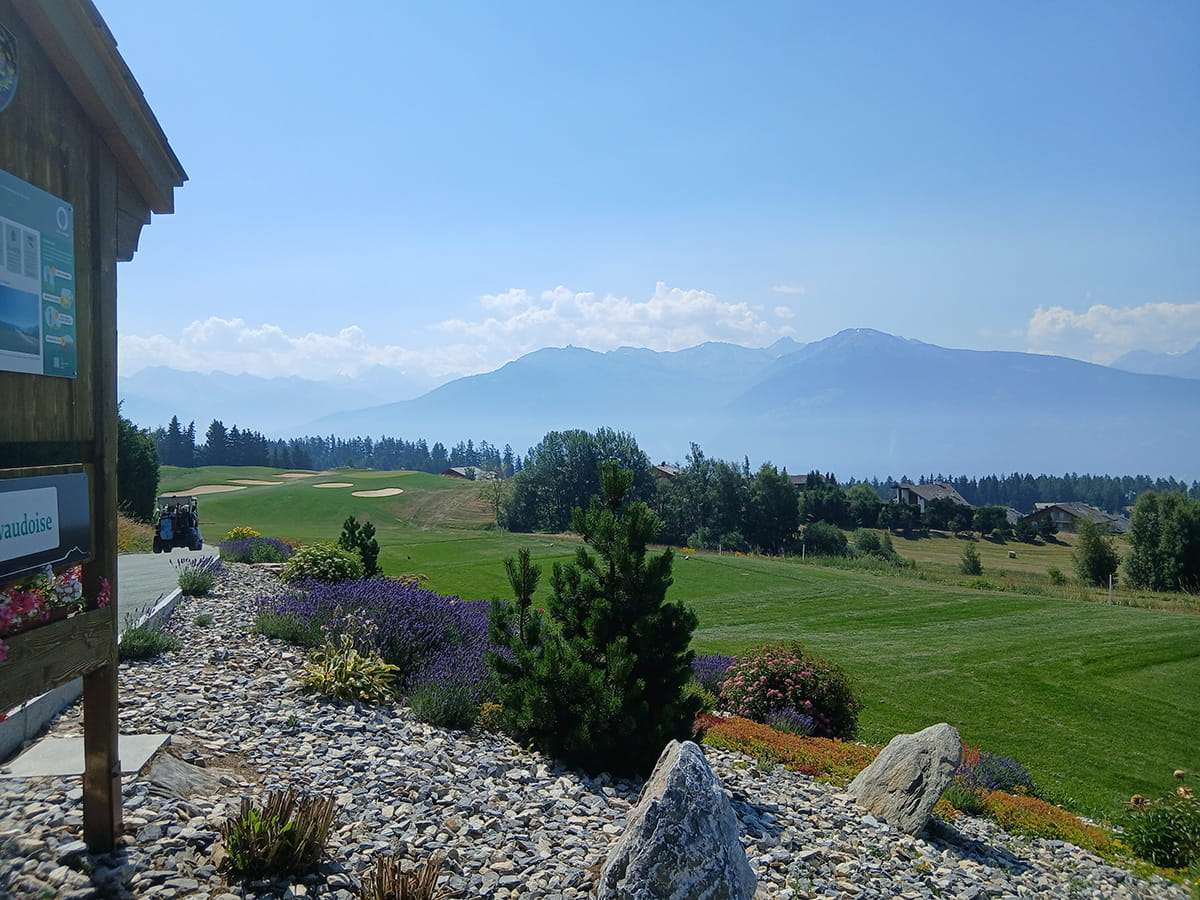
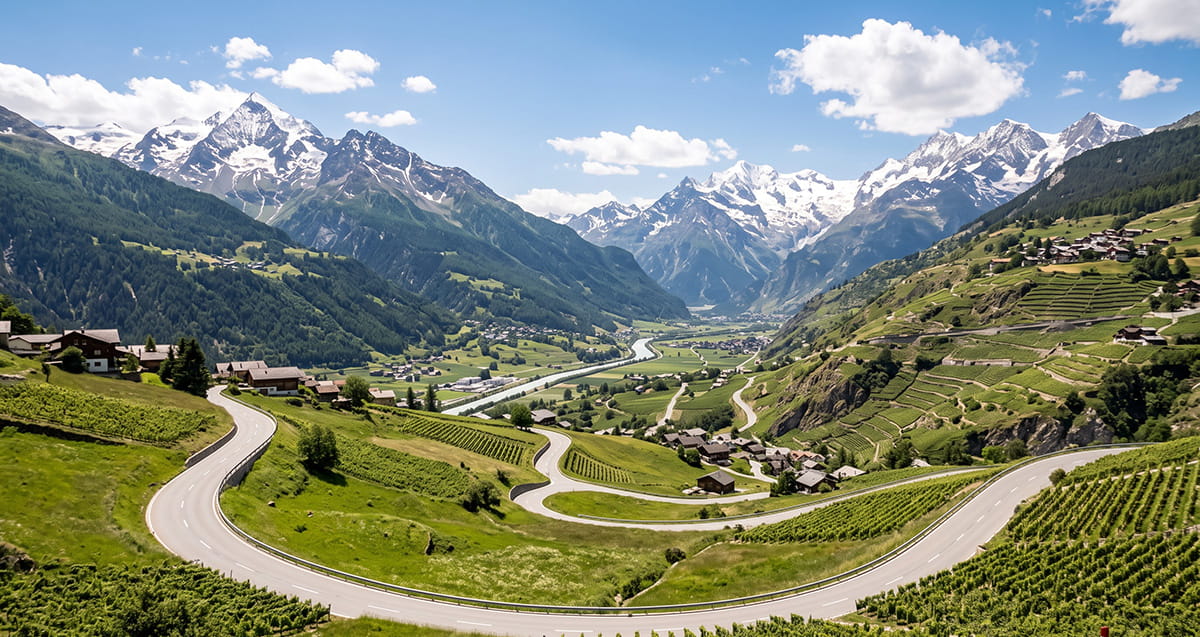
The journey up sets the tone beautifully. You climb through the Valais Valley with a proper sense of ascent, the road twisting through hairpins before the landscape opens into Crans-Montana. It is one of those mountain resorts where golf does not sit on the edge of town hidden away behind gates. It is right there in the middle of things, tucked among hotels, chalets, shops and cafés, which gives the whole experience a slightly surreal feel. One minute you are walking through a resort village, the next you are looking down onto one of the great tournament finishing holes in European golf.
Past the public car park, the clubhouse sits above the 18th green and immediately gives off that old-established tournament-club atmosphere. Inside, the welcome was exactly what you hope for on a trip like this: warm, relaxed and completely unforced. Behind the 1st tee there is a well-stocked pro shop with Omega European Masters gear and club merchandise that can do serious damage to your holiday budget if you are weak around logoed golf kit.
Just as compelling is the board of champions. It is the sort of roll call that makes you slow down: Seve, Olazábal, Sergio García, Craig Stadler, Nick Price, Nick Faldo, Ian Woosnam, Danny Willett, Matt Fitzpatrick and Thriston Lawrence. When a club can connect your own round to that list, it changes the mood before you have even pegged a ball.
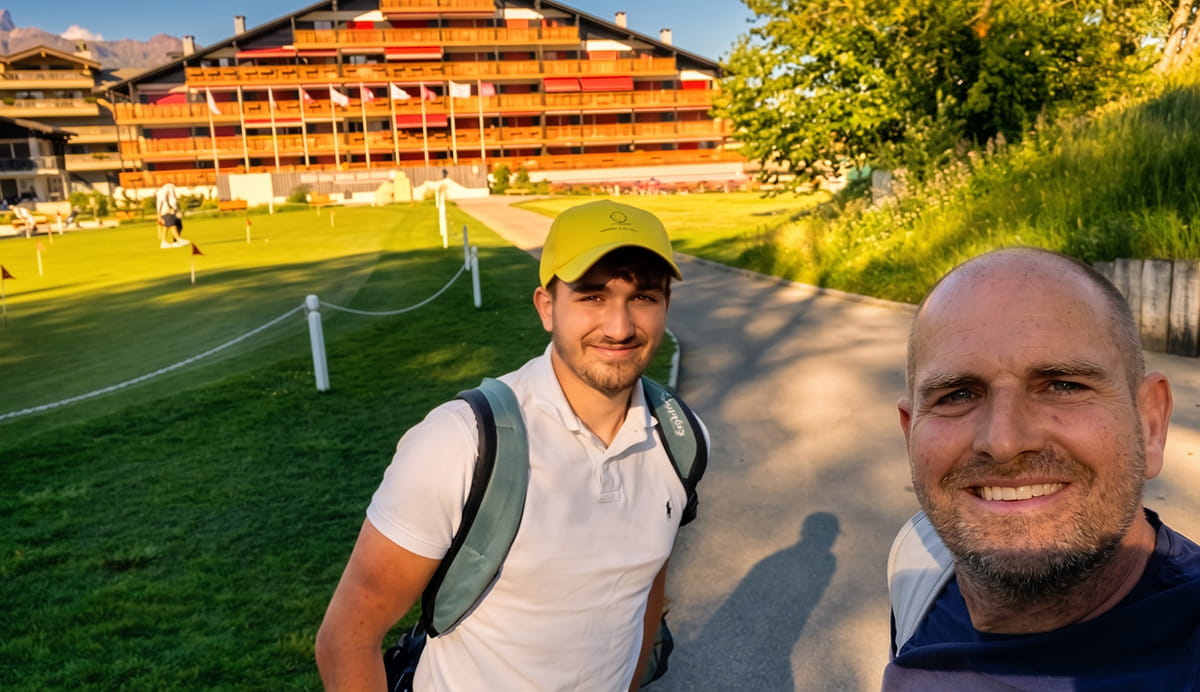
We stayed nearby at Hotel Étrier, a classic chalet-style base that suited a golf trip perfectly. It offered the right mix of comfort and convenience, with mountain views, a pool and spa for loosening up after the round and an easy walk into town and over to the course. In a resort like this, that matters. Being able to leave the car where it is and simply stroll to golf, dinner and a post-round drink makes the whole trip feel effortless.
World-Class Practice Facilities
The evening before our round, we walked down to the practice ground situated in the middle of the course. Framed by ski lifts crossing overhead, a reminder that several holes double as ski slopes in winter, the range feels like the Tour-level facility it is. It features TrackMan setups off mats, a pristine grass area, and a restaurant terrace overlooking the valley.
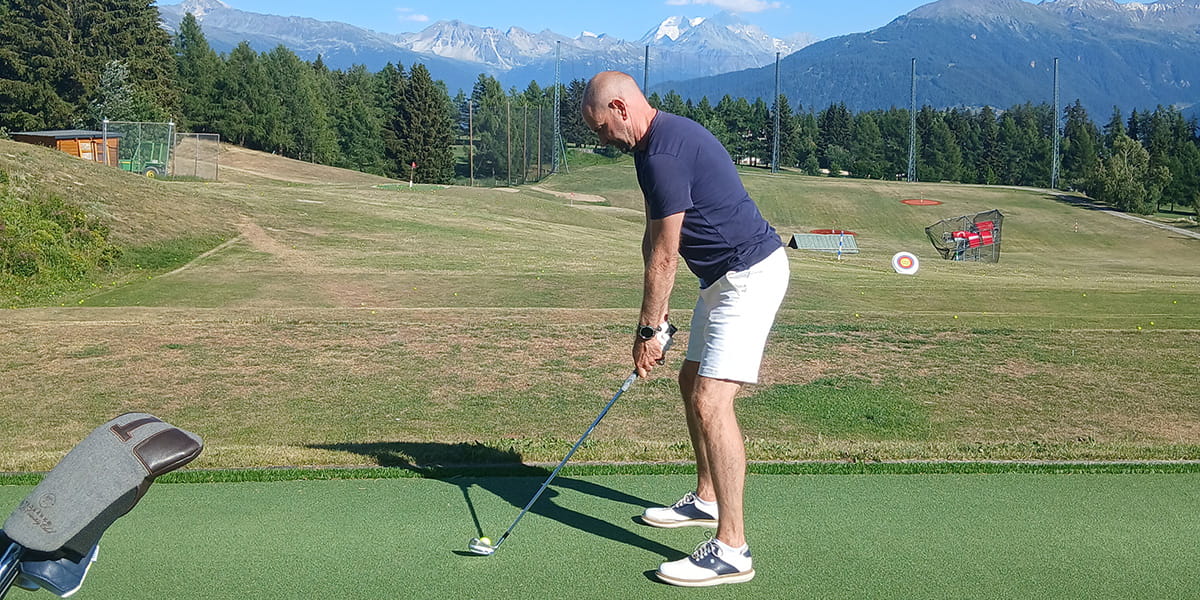
The setup is superb. There are TrackMan stations on the mats, a pristine grass tee and a terrace restaurant overlooking the valley, so even a casual warm-up starts to feel faintly Tour-like. We also had a look at the indoor putting area, a nice extra touch at a venue where the standards are high across the board.
What really adds a layer of fascination is the altitude. At around 1,500 metres, you do notice the difference. Range balls stay in the air and carry farther than your eye expects, especially with short and mid-irons. You still have to strike it properly of course, but the mountain air gives even average shots a little extra hang time. Watching a few balls fly 10 to 20 yards beyond your usual numbers is a dangerous sort of fun. It builds excitement quickly, but it also plants the seed for some very questionable club selection the next morning.
If this sort of Alpine tournament golf is your idea of a proper trip, play Crans-sur-Sierre on your next golf holiday in Switzerland. It is one of those rare venues that looks famous, feels famous and absolutely plays like a championship course.
Teeing Off on the Severiano Ballesteros Course
On the morning of the round, after a sensible session on the range and a few putts to settle the hands, we made our way to the 1st tee of the Severiano Ballesteros course. We were paired with two local lady members, one of whom had been at the club for 45 years, and they turned out to be ideal playing partners. That is one of golf’s enduring joys. You travel across Europe to tick off a dream course and end up being shown around by members who know every bounce, every angle and every subtle mountain read.
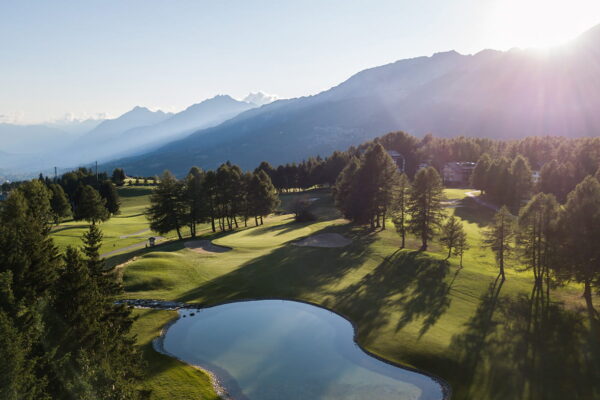
Standing on that opening tee with the champions’ board nearby, I had exactly the sort of nerves you get when a course has lived in your imagination for decades. Crans-sur-Sierre is not intimidating in the brutish sense. It is not trying to overpower you with length. It gets you another way. Trees frame the holes tightly, the property rises and falls in awkward little pitches and shelves and the greens ask proper questions. It is a course where position matters, where side of the fairway matters and where enthusiasm off the tee can leave you blocked out very quickly.
Hole 1: 494 metre Par 5
The 1st is a tricky opener framed by trees and it asks for control immediately. I drifted left, found trouble and took six shots to get to the green. Dream start. Double-bogey seven. My son, naturally delighted, was quick to point out that after waiting somewhere between 35 and 40 years to play the place, I had chosen to begin with a mess. Fair comment, to be honest.
That opening hole tells you something useful about Crans. If you arrive thinking only about scenery, altitude and tournament glamour, the course will nick a few shots off you in a hurry. It wants attention from the first swing.
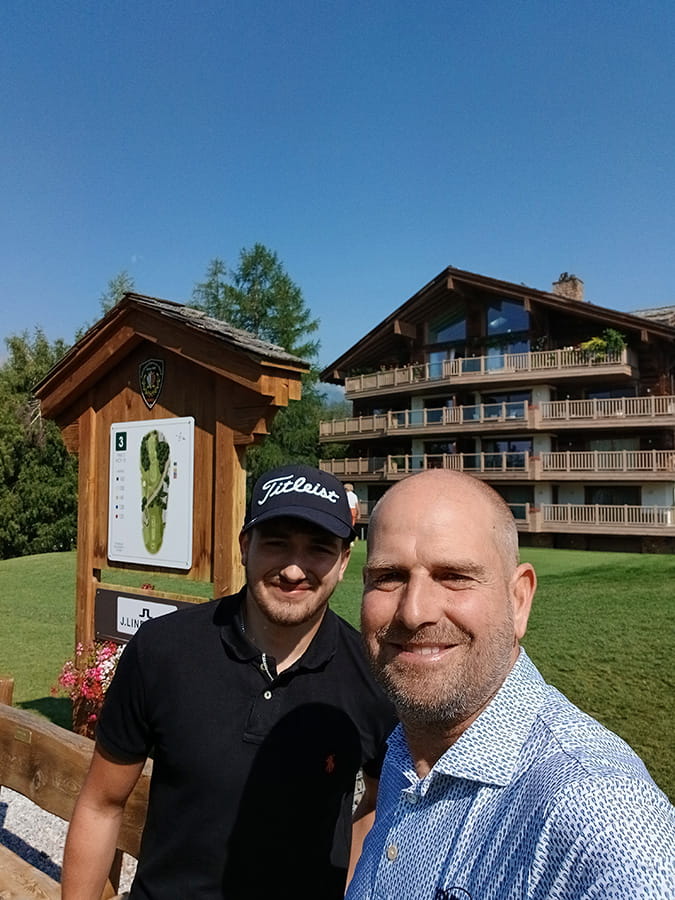
Hole 3: 175 metre Par 3
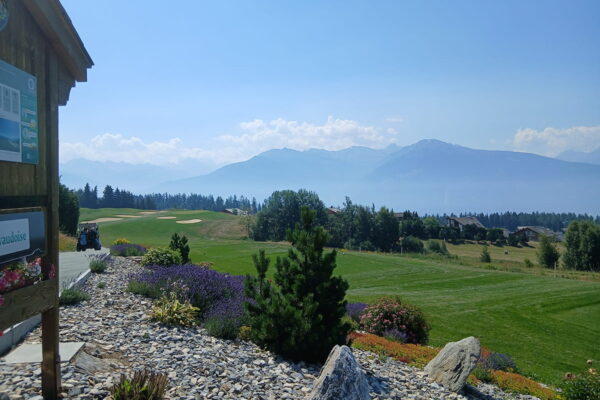
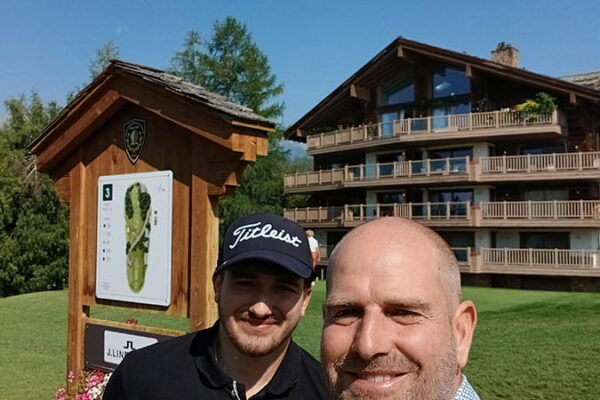
The 3rd is one of those holes that stays with you because it feels so rooted in its setting. It is a short par 3, but not a throwaway one. You play over a road and there is a grand chalet right behind the tee, which makes the whole scene unmistakably Crans-Montana. It is a lovely example of how the course and the resort are interwoven. Strategically, it is still a proper little test because mountain air can make distance control slippery. On a short hole at altitude, the temptation is to get aggressive. Usually the smarter play is to trust the number, make a committed swing and let the setting provide the drama.
Hole 7: 303 metre Par 4
The 7th is the hole many golfers picture first and in person it absolutely delivers. It is a dogleg-right par 4 playing across a pronounced dip and for the longer hitter there is genuine temptation to have a go. That is the sort of risk-reward equation Crans does so well. The aggressive line brings the green into play, but the visuals can seduce you into underestimating the carry and the shape required.
My son stepped up and hit a beauty onto the front edge of the green, which is precisely the sort of shot that makes a father proud while also being mildly irritating in the middle of a match. From the tee, the hole looks cinematic. From the fairway or the green, it reveals how cleverly the land has been used. It is not only attractive, it is strategic.
Holes 8 & 9: 160 metre Par 3 & 579 metre Par 5
The 8th is a picturesque par 3 back up the hill and again the challenge is not brute force but judgement. Playing uphill in thin air can create that awkward tug-of-war between elevation and altitude. One tells you to take more club, the other whispers that the ball is flying farther. Get the balance wrong and you can miss long or short by more than you think.
The 9th is a par 5 that brings you home near the European Masters scoreboard and the halfway hut. It is a terrific end to the outward side, giving you a chance to open the shoulders a touch more before refocusing around the green. We happily stopped for snacks at the turn, which felt entirely in keeping with the spirit of the place. Good golf trips should include a proper halfway stop and this one certainly earned it.
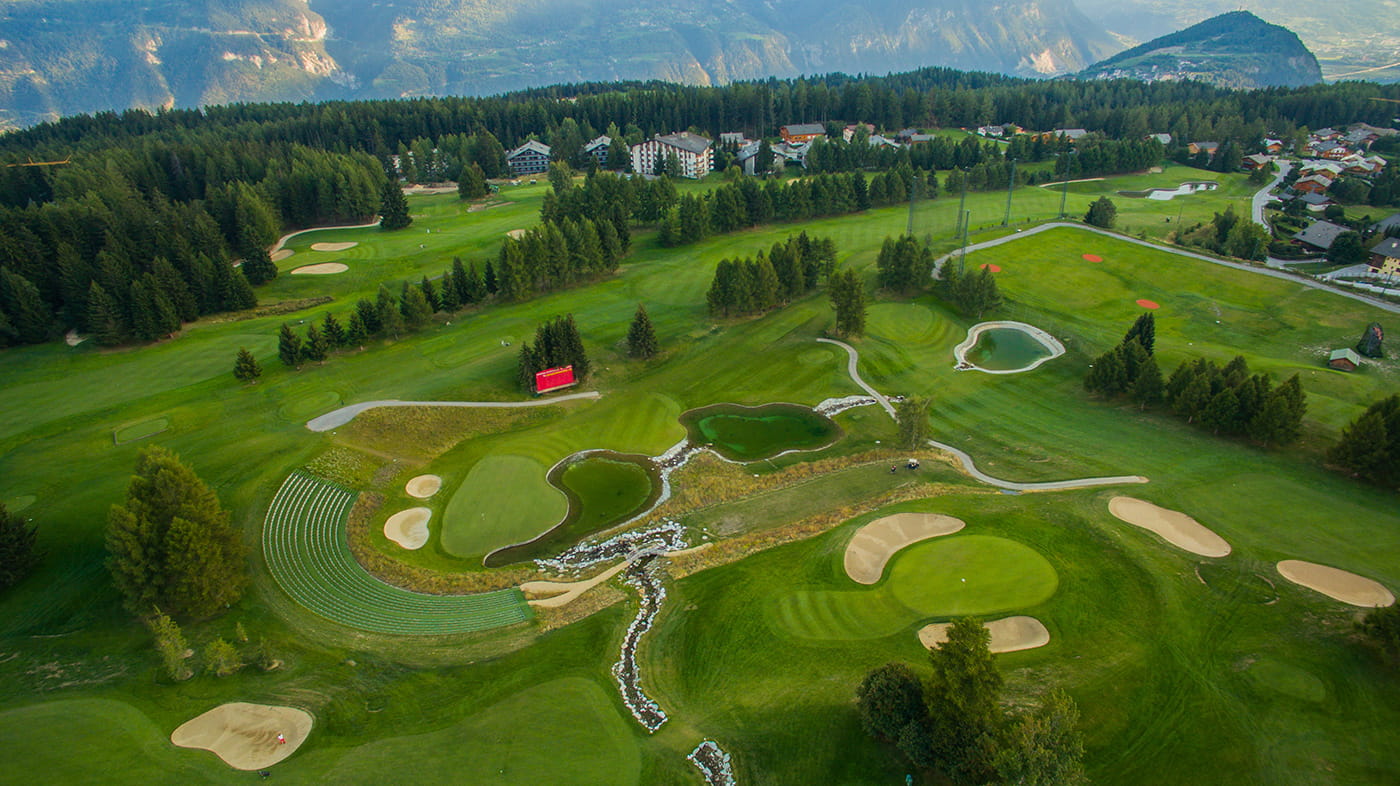
The back nine keeps winding around the mountain terrain and the practice areas, using the contours intelligently rather than theatrically. That is worth noting because Crans-sur-Sierre is often talked about for the scenery first. The views are sensational, yes, but the course works because the routing keeps changing the questions. You are not simply hitting one postcard shot after another. You are being asked to adapt.
Walking in the Footsteps of Seve on the 18th
Hole 13: 178 metre Par 3
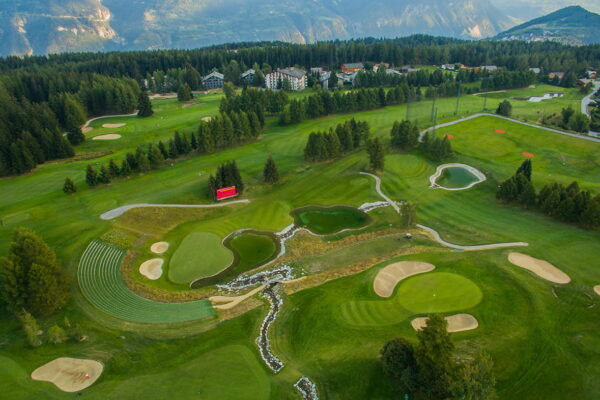
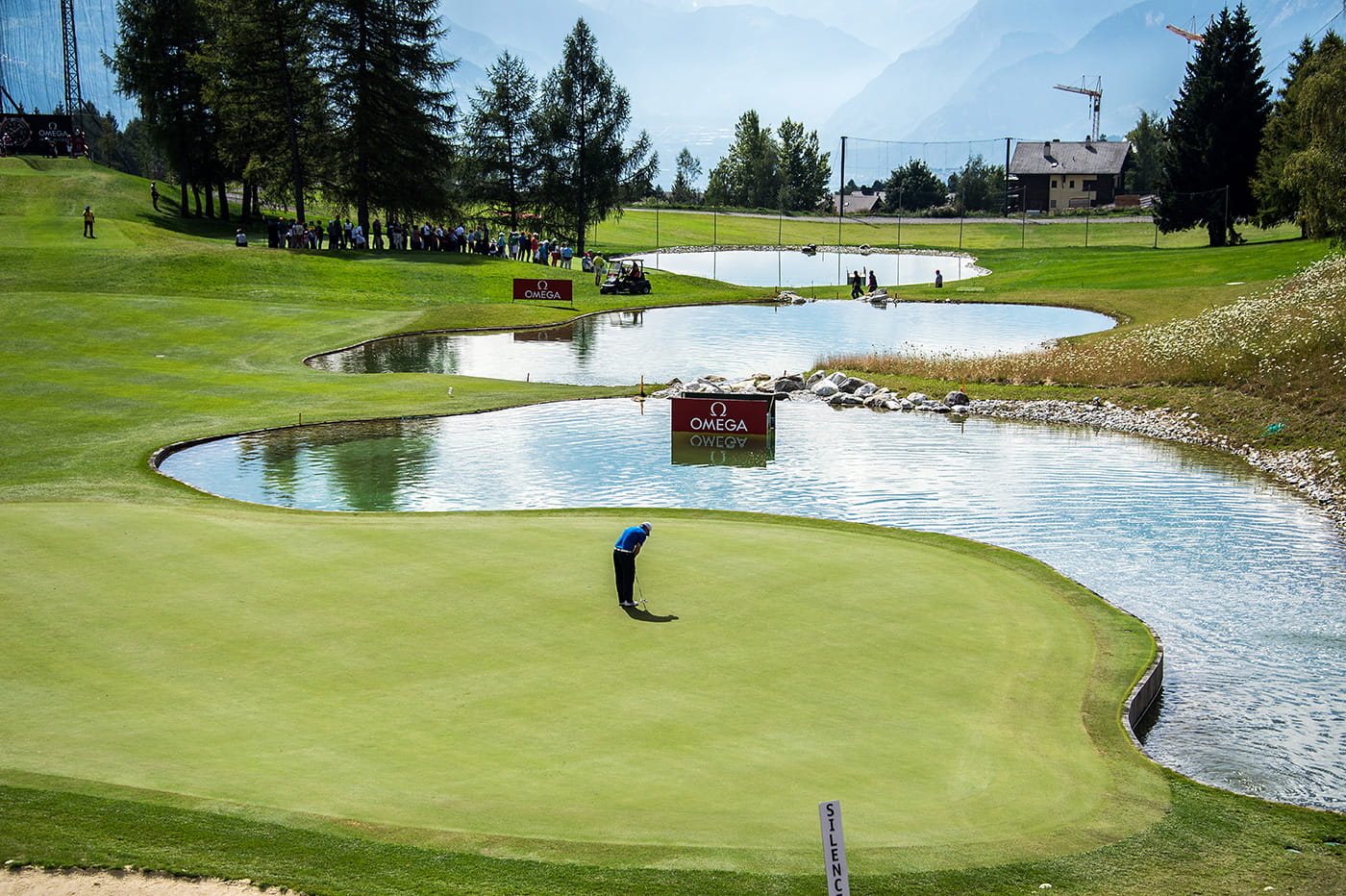
The 13th is one of the most recognisable one-shotters on the property, played in a natural amphitheatre with unmistakable tournament character. Even without grandstands full of spectators, it has that event-hole feeling. It is the sort of par 3 where your eyes go to the surroundings first, but your score depends on focusing on the target. The green complex asks for a precise strike and anything a little loose tends to look even looser in that bowl-like setting.
Holes 14 & 15: 541 & 518 metre Par 5’s
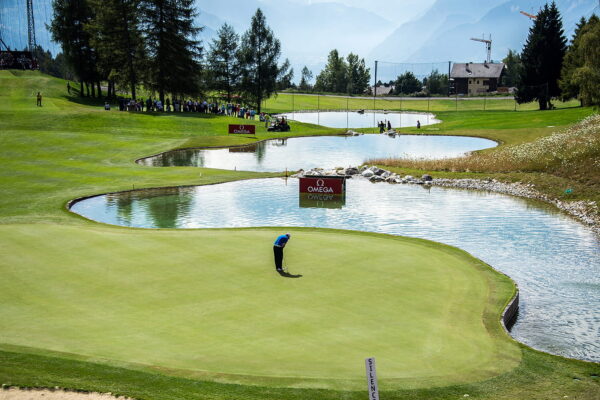
The 14th and 15th form a cracking two-hole stretch. One heads down the hill with water guarding the green, the other turns the challenge back uphill. This is where the altitude becomes part of the entertainment. Well-struck tee shots seem to stay airborne forever and the ball chases with a little extra life when it lands. On downhill ground especially, that can be exhilarating if you have found the line and expensive if you have not.
These are not par 5s where you can switch your brain off and simply whale away. Position still matters because the approaches are shaped by slope, carry and angle. The downhill hole asks whether you want to press for more or lay back to a full number. The uphill one makes you earn everything. They are a fine reminder that extra distance only helps if you know where to place it.
Holes 16 & 17: 181 metre Par 3 & 360 metre Par 4
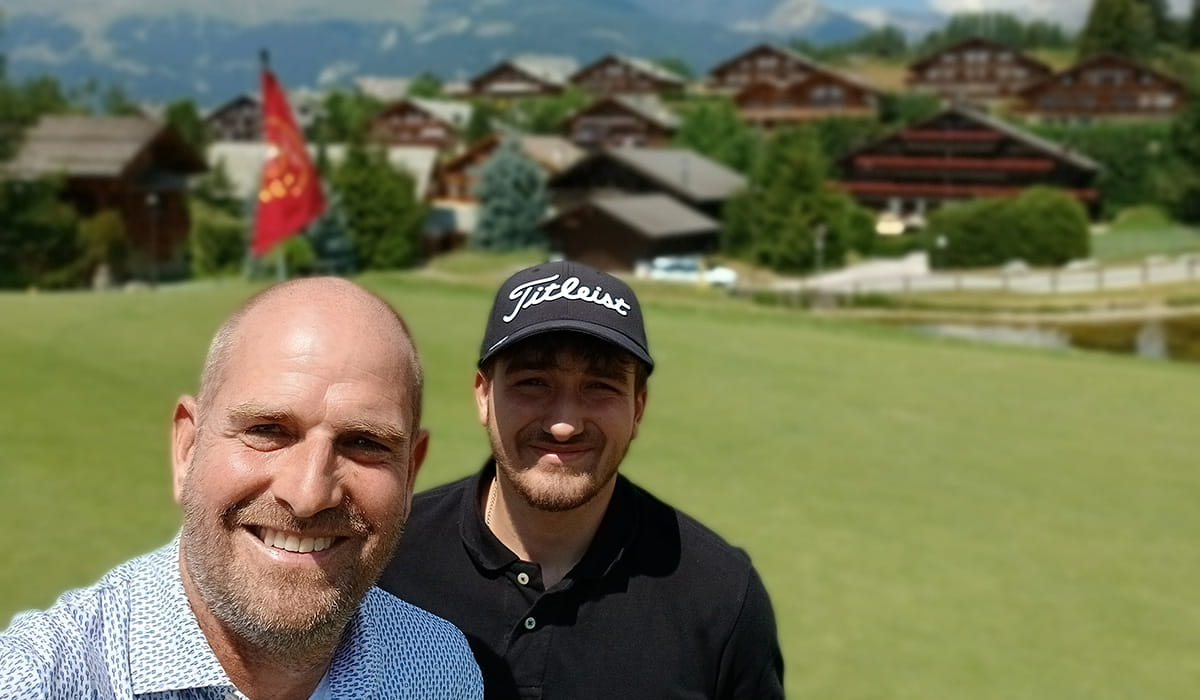
The 16th is a short par 3 set against a backdrop of hotels, which again underlines how closely the course sits within the resort. It has a compact, intimate feel and is exactly the kind of hole that can punish a lapse in concentration late in the round. Short par 3s at altitude are dangerous for that reason. Players start thinking birdie before they have made the number behave.
The 17th then shifts gears with a dogleg-left par 4 that asks for shape and placement from the tee. By this point in the round, especially if you are in a friendly father-and-son match, the temptation is to force things. Crans resists that approach. It keeps rewarding discipline right to the end.
Hole 18: 368 metre Par 4
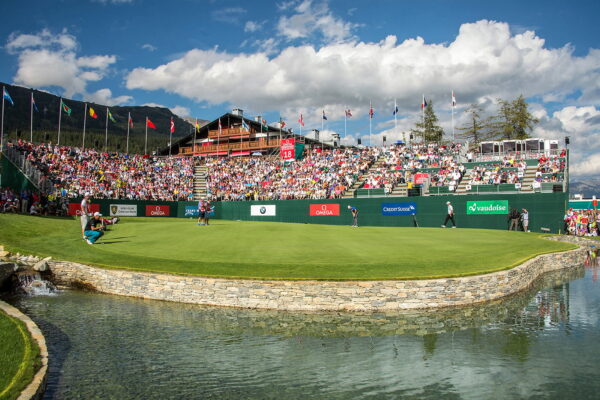
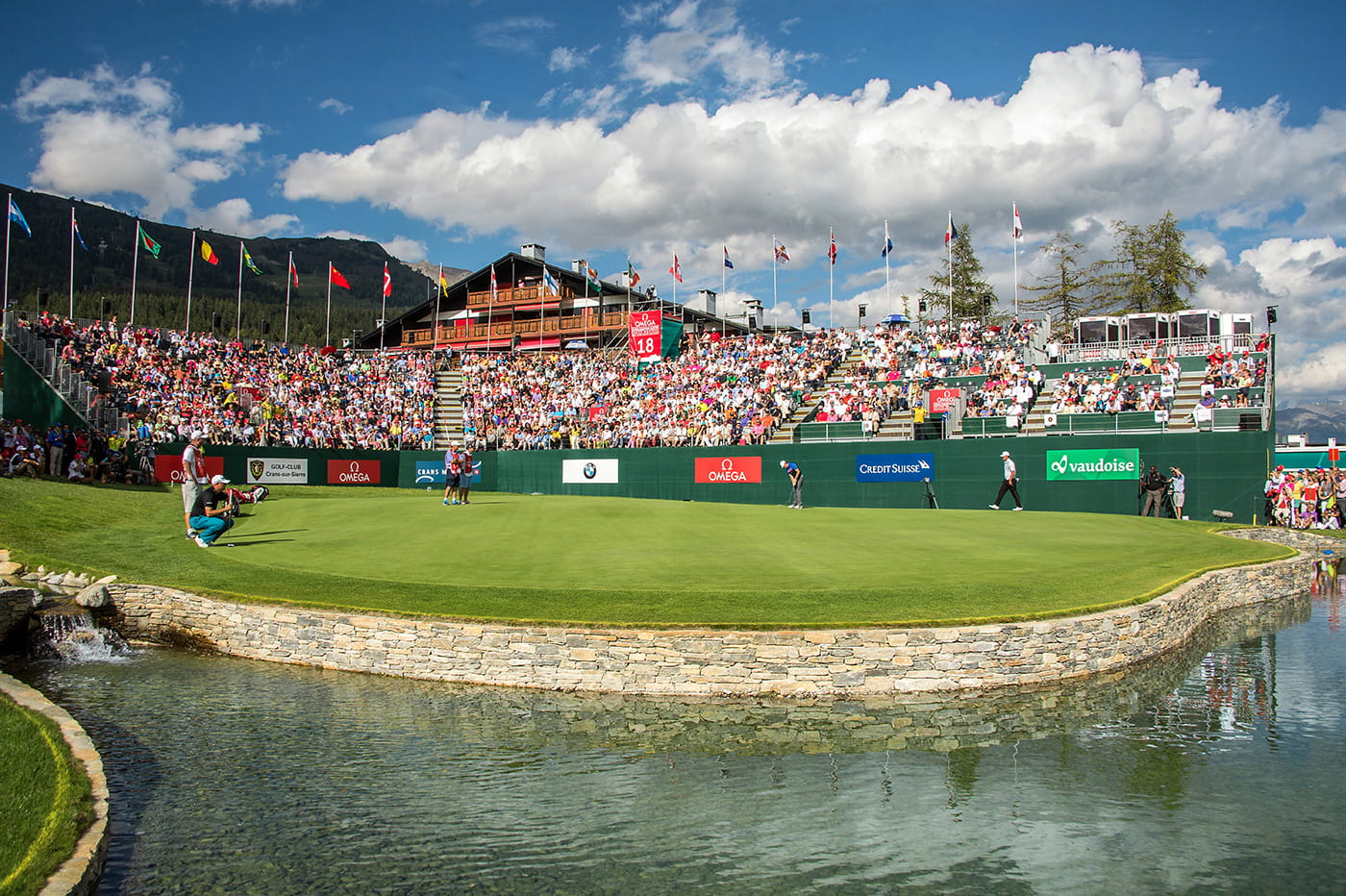
Then comes the 18th, one of the iconic finishing holes in European golf. Before we even putted out, we walked to the right side of the green to look at the plaque commemorating Seve Ballesteros’ famous recovery from behind the wall and over the swimming pool during his victory here. Seeing that spot in person is brilliant because it immediately recalibrates your sense of what was possible. On television it looked outrageous. Standing there, it looks close to impossible.
We recreated the famous pose, crouching to inspect the route over the wall, and it became very obvious very quickly that genius is a separate skill set. It is one thing to know the story, another to stand on the ground and understand the imagination and nerve it required.
Finishing on the 18th green and turning back toward the clubhouse veranda with the mountains behind is the sort of golfing image that sticks. Some courses give you one memorable hole. Crans gives you a finishing scene. That is a different thing altogether.
A Bucket-List Journey Completed
In the end I had to absorb the small indignity of losing the match to my son, which he was kind enough not to mention more than necessary. But the result really did not matter. This was one of those rounds that had been building for decades and somehow still managed to meet the expectation.
What makes Crans-sur-Sierre special is not just the Alpine panorama, though that is obviously world class. It is the combination of setting, tournament history and shot-making interest. The course never feels like a museum piece you are tiptoeing around. It feels alive. You can sense the Omega European Masters in the routing, in the practice ground, in the finishing stretch and in the stories attached to specific holes. At the same time, it remains a wonderfully playable experience if you respect the angles, account for the altitude and enjoy the chess match.
For any golfer who grew up watching Seve, Faldo, Olazábal and the rest in the mountains of Crans-Montana, this place delivers on the dream. For anyone discovering it now, it is still one of the most distinctive rounds in Europe.
Play Crans-sur-Sierre on your next golf holiday and turn a great golf trip into a proper bucket-list one.